Stress less and Mindfulness

By Luke Lara, Ed.D.

Every three years I undergo a tenured faculty review process, which includes a self-study where I reflect on the previous three years. I enjoy reflecting and writing, yet I was dreading the next evaluation cycle. Back in 2019, I articulated a goal to introduce mindfulness to my department. This is a goal I set in 2019 and continued to set for myself in 2022. I had planned to request time at our department meetings and do a brief exercise. I also was going to explore organizing a group of counseling faculty interested in mindfulness to engage in regular practice as a community. None of that happened.

I had not anticipated a deep dive into leadership on campus that pulled me away from the department for several years. Simultaneously, the COVID-19 Pandemic in Spring 2020 upended the way faculty meetings would be held. Doing anything in community using a video platform such as Zoom is not the same as in person. Zoom fatigue was real!  We were burnt out from zoom meetings and zoom student meetings. It felt antithetical to have zoom mindfulness sessions. I waited, thinking the pandemic would subside and we would return to “normal.” It’s 2024 and most college meetings are still virtual, even though my remote work is limited. Back to the drawing board!

Mindfulness, the ability to be centered and present in situations that are stressful, is so critical at this time. It is an incredibly helpful tool to deal with technology, lead difficult conversations, and support colleagues and students. Life and work have become more stressful all around. Cultivating a practice of mindfulness is important so that when you find yourself stressed, its right there, ready to be put into play: a natural response in the moment.

I was first introduced to mindfulness as part of a leadership course in my doctoral program at San Diego State University in 2015. I have found both body movement and breathing exercises to be helpful in regulating my emotions, while developing empathy and compassion for myself and others. I have been excited to share it with others ever since.

Given that life is not slowing down and our new normal is hybrid, I created a series of 5-minute audio files so that colleagues can practice mindfulness on the go. Each mindfulness practice has a unique focus on body movement or breathing, while bringing awareness to and centering oneself in the moment.

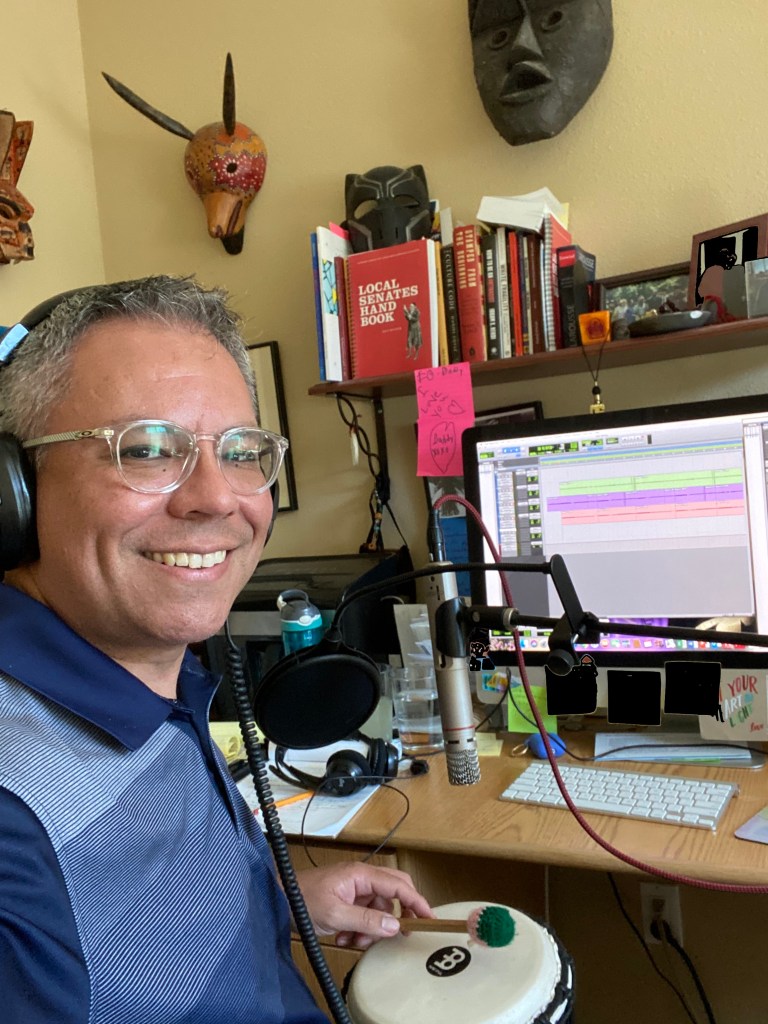
In addition to a calming voice recording of a mindfulness exercise with instructions, each also have original background music to enhance a soothing effect. I am a musician and play various indigenous wind and string instruments from the Andes region of South America. The sounds are derived from various instruments, including the Quena (flute), Quenacho (large flute), Ocarina (novelty flute), and Charango (small 10-stringed instrument). Several colleagues have listened and reported the combination of Andean culture and voice has a transcending impact.

By engaging in this creative work, I am stressing less and hopefully providing that same opportunity for you and others.

Click on the links below to hear the currently available mindfulness recordings:

Behind the scenes having fun overlaying music with mindfulness exercises.

Next Big Twist: California Community College’s Fraudulent Enrollments Saga

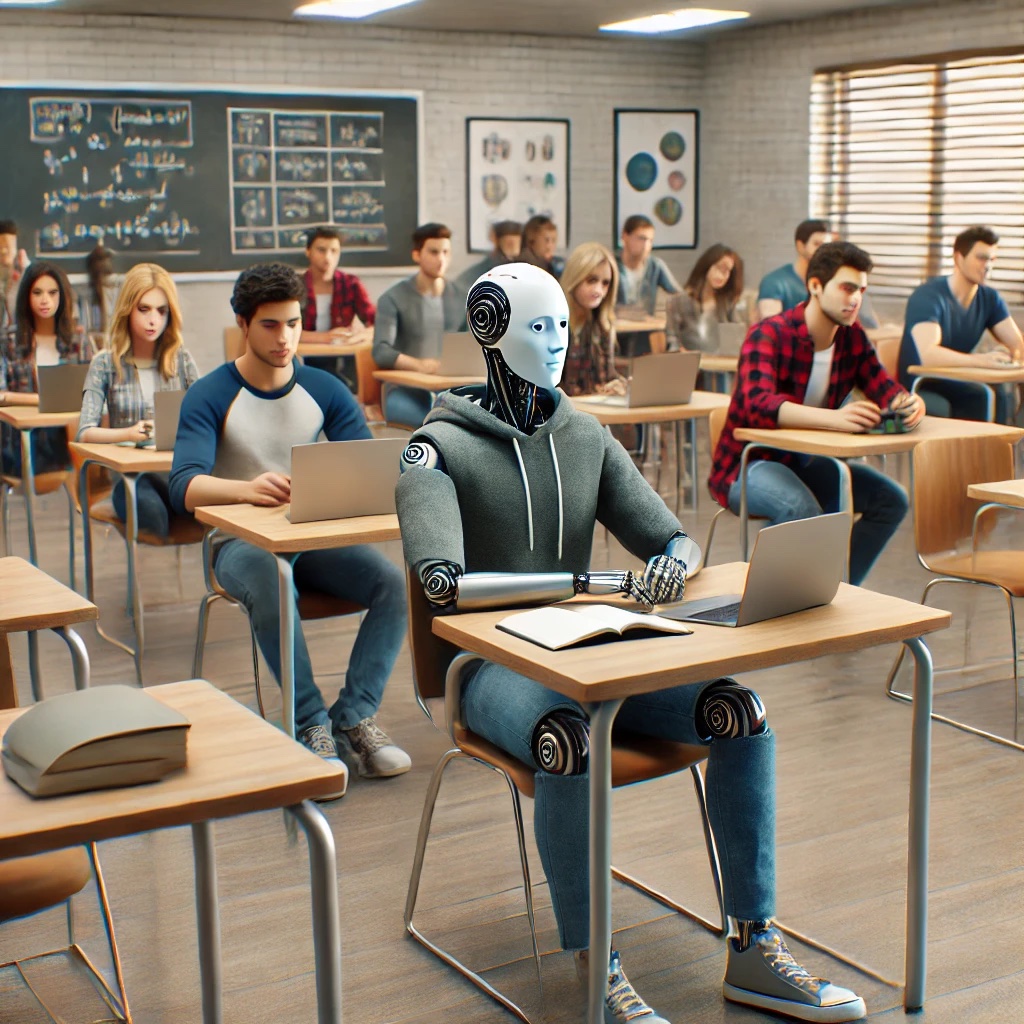
A realistic college Classroom scene with students sitting at desks. One of the students is a robot. Image generated by DALL-E 2024-09-02.

Image generated by DALL-E on 2024-09-02 by Luke Lara, prompted by “Realistic image of college classroom with students sitting at desks and one of the students is a robot”

By Luke Lara, Ed.D.

I have been working long enough in the California Community College system to remember all the paper applications students needed to fill out to enroll in college and apply for Federal Financial Aid. It was only thirteen years ago that the paper process eventually give way to an electronic process, with the promise of ease, convenience, and efficiency. The honeymoon period ended as criminal elements exploited technological advances and opportunities to easily, conveniently, and efficiently defraud the federal government and colleges of Federal Financial Aid.

The LA Times first reported on the California Community College-wide financial aid scam in 2021. At the height of the COVID-19 Pandemic the majority of California Community College courses were being taught online or remotely. Prior to the Pandemic, California Community Colleges offered most of their courses in-person or on-ground, with only a modest percentage of courses offered completely online. From 2020 onward, the opposite has been true, with 116 California Community Colleges varying in their approaches to find a new balance between on-ground and online course offerings. The heavy online environment we find ourselves in is ripe for continued fraudulent enrollments.

A statewide faculty advocacy group, Faculty Association of the California Community Colleges (FACCC), published an in-depth story on the magnitude of online bots in creating fraudulent enrollments through spring 2023. CalMatters, a California nonprofit and nonpartisan media group, emphasized this ongoing situation in April 2024 by sharing that California Community Colleges have lost more than $5 million to fake students.

Still, the story gets even more interesting, and it has not been written about anywhere yet. While colleges are becoming more proactive by employing mitigating maneuvers, criminal elements continue to evolve in their technological tactics. Admissions offices are having to assign more human eyes to review student applications, slowing down the enrollment process for the sake of ensuring real students enroll and fake ones are thwarted. Bots are now leveraging Artificial Intelligence (AI) to evade detection at the enrollment level and beyond.

A recent memo to faculty at the beginning of the Fall 2024 semester from Denée Pescarmona, Chief Instructional Officer at MiraCosta College, provided a glimpse into the next twist in fraudulent enrollments:

We have been flagging for review students who are registered in online only classes that do not align with their educational goals, as well as many other “flags” we have learned about in past work trying to eliminate these fake students. We currently have a new trend: fraudulent students adding an on-ground class to their schedule to try and bypass our existing mitigation measures. (Emphasis added)

Run that by me one more time? Fake students are now registering for on-ground courses? In addition, the memo stated:

We have received reports from faculty that they are receiving emails asking ​on- ground instructors to [teach] remotely [or] not be dropped for the first two weeks specifically using September 3 (after drop/census), as the date they will return to in-person class. These emails are not honest and are part of the larger scheme to defraud the college out of financial aid dollars.

On-ground, in-person courses use to be safe from virtual bots. This concerning trend continues to escalate, leaving one to wonder what it will take to block these fake enrollments completely. California Code of Regulations (Title 5) stipulates in §§ 58004 and 58161 the guidelines on how students are counted in credit courses for state apportionment funds. Fraudulent enrollments have significant financial implications to a college beyond the loss of financial aid money. California Community Colleges rely on their enrollments for subsequent year State budget apportionment. Having to recalibrate enrollment figures can jeopardize a college’s ability to secure the funding necessary to meet the needs of their actual students. A systemwide solution is necessary.

What is your college doing? Will we return to the ways of the paper application? I hope not, but paper may be the only way to unplug these fraudulent bots wired on AI.

Academic Leadership in the Time of COVID

"COVID-19 - The year of the virus" by joncutrer is marked with CC0 1.0
“COVID-19 – The year of the virus” by joncutrer is marked with CC0 1.0

by Luke Lara, Ed.D.

Part I: How it Began

One year ago this week, I began my journey as the Academic Senate President. It also happened to be a few days after the death of George Floyd and right before the pandemic began a second wave in America. Our local Academic Senate usually does not meet during the summer. I thought: How should I respond? What do the faculty expect to hear from me? It did not take me long to decide what to do.

There were many ways I had imagined embracing this important role; however, entering a quickly and ever shifting world of remote education and reckoning with systemic racism were not on my mind three years earlier when I ran for vice president and then president-elect. The latter I was well prepared for, but the pandemic certainly exacerbated it and forced a racial awakening for everyone, everywhere.

I had just finished a year of consulting with the Academic Senate for California Community Colleges, collaborating with various constituency groups, writing papers, and doing presentations across the state. I made contributions to moving policy and discussion around student success, equity-driven systems, anti-racism, equity in hiring, and faculty diversification and retention. Equity, anti-racism, and naming systemic racism were at the root of my writings and presentations.

My initial reaction was to take this opportunity to address the faculty. Everyone was on break. I did not know what to expect. I sent a letter to my faculty colleagues on 5/30/2021. It contained a personal message to introduce myself, a uniting message in the face of chaos, and resources for action including allyship training, anti-racism resources, petitions, donations, mental health resources for the Black community, and organizations for those who want to get involved.

Excerpts of the letter are here:

  • …This is not the way I imagined my first email to our community as the Academic Senate President during my first week in this role. I write with a heavy heart and tears in my eyes. While many of our own Black faculty, staff, and students are mourning their loved ones as a result of the disproportionate impact that COVID-19 has had on the Black community, they are also grieving in unison for the victims of police brutality, their families, and communities. The recent police violence and hate crimes against members of the Black community (Breonna Taylor, George Floyd, Nina Pop, D’Andre Campbell, Tony McDade, Regis Korchini-Paquet, and Ahmaud Arbery) have seared a pain that has reverberated across the nation.
  • …Diversity, equity, and inclusion are buzz words for most, but these terms carry a spirit that has defined how I embrace life and how I move in this world.
  • …Given that we will remain in a mostly distance education format for the summer and fall, it is important that we engage purposefully as a community. I urge us to be race conscious, to be equity-minded, and anti-racist in what we do, teach, and how we enact our roles.

Part II: What has Developed

We met on June 25, 2020, in a special meeting of the Academic Senate to review, discuss, and approve a resolution of the Academic Senate: Declaration that Black Lives Matter and a Call to Action. Throughout this past year, we have steadily implemented changes based on this resolution. The following are examples of implemented changes:

  • The Academic Senate surveyed BIPOC faculty to learn about the faculty experience of the tenure process and institutional retention efforts. A taskforce gathered the survey results and presented recommendations to the Academic Senate in May 2021.
  • The Academic Senate’s subcommittee on Diversity, Equity, and Cultural Competency created a joint taskforce with the Tenure Review and Evaluation Committee to make recommendations to changes to the tenure review process, evaluation criteria, and training.
  • The Academic Senate worked closely with the administration to create a Student Conduct and Police Advisory Committee in the fall of 2020. The charge of the committee is to review data on campus police interactions with students, give guidance on restructuring of the police department, and make recommendations to policies and procedures.
  • The Academic Senate subcommittee on curriculum, the Courses and Programs Committee, have steadily reviewed policies and procedures around the philosophy of the associates degree to make changes that are equity based (pending approval), including: allowing the use of “C-” grades for major courses, reducing the number of units required for the science general education area, and reducing the number of units required in general education for the high unit Nursing degree.
  • Professional development partners, including inter-college groups, our online educators’ group, our teaching and learning center, and others, have been creating, facilitating, and sharing opportunities locally, state-wide, and nationally with all faculty on topics ranging from anti-racism and equity in online course delivery, curriculum, teaching, and student engagement. Faculty have been inspired to create discussion groups to discuss race and racism. Two faculty leaders have coordinated a formal group of 12 faculty during a year-long journey to review their own curriculum and teaching practices through an equity lens. This group is called the Cultural Curriculum Collective.

All of the above, unfortunately, would not have been possible within one year if the tragedies of our Black community have not happened. We are only just beginning to make transformative change. Before I get burned out, I need to take a step back, take a deep breath, and be mindful in this moment.

Part III: How I Sustain a Forward-Attitude

In the academic world we talk about GPA’s all the time, but one thing is for sure, my GPA has strong this past year. No, I am not talking about an academic GPA. I am talking about having Gratitude, Patience, and Adaptability. I want to acknowledge that my colleagues have demonstrated a strong GPA and resolve this year and we were only able to accomplish the above list as a collective. So, you could say that our cumulative GPA is what allowed us to be successful.

I am grateful to all of my colleagues. I have seen us work together, complain together, brainstorm together, laugh together, and still be focused on what’s most important—our students.

I have learned to be more patient and to practice mindful breathing. As many of you may have experienced, I am not only working at home, but I am teaching my children, being responsive to important relationships in my life, being anti-racist, and also trying to stay mentally and physically and healthy.

Lastly, I am completely in awe of our adaptability to the changes that this past year has thrown us. In 2019, we could not have imagined what it would be like to offer the majority of our courses through distance education, conduct our work remotely, or even begin to decolonize our institutions or even have campus-wide discussions about race. But here we are!

This is not a moment. This is not a blip. We have embarked on a journey that will lead to healing and transforming practices and policies. We cannot go back to how things were in 2019. That was the past. I look forward to reflecting again in a year from now when my presidency ends. Until then, join me in sustaining our collective GPA through community. Equity work is hard. Transforming systems and institutions is hard. Yet, we can do it together. ¡Si se Puede!

The Accidental Doctor with a Passion for Hiring Practices

By Luke Lara, Ed.D.

I came to my office on June 5, 2015 and found a note on my chair. It said, “Dr. J. Luke Wood is looking for you. Give him a call at…” I recognized the handwriting and went to find my colleague with the distinct print. Why would Dr. J. Luke Wood be looking for me and why did he contact my colleague? Confused, I asked my colleague, but he just shrugged his shoulders. Minutes later, I dialed the number on the post-it note. That was the beginning of a whirlwind three years of my doctoral program.

A month earlier, I had attended an Equity Summit at a local hotel in Carlsbad hosted by my college’s Student Success governance committee. The keynote speaker was Dr. J. Luke Wood of San Diego State University (SDSU). He also happened to be the Director of the SDSU Ed.D. program. He discussed his latest research on men of color in community college. I remember how this was the first time I had heard of such research and felt excited to learn more. After the presentation, a colleague introduced me to him. I expressed interest in Dr. Wood’s research. He asked me, “Have you considered getting a doctorate degree?” I replied, “You know, I applied back in 2009 and was accepted to the program, but because I had just been offered a full-time tenure track position and had a newborn son, in consultation with my partner we decided I could only do one or the other.” I continued, “At the time, getting paid was the logical choice.” To that, he retorted, “Would you apply again?” Was he calling my bluff? I felt the pressure to say yes. I jokingly replied, “Would I have to take the GRE again?” It had been 10 years since I had taken the GRE and the anxiety lingered. After what seemed several moments of thought, he surprisingly said, “No.” Our conversation ended with me saying with a smile, “Okay, then I’ll think about applying next year.”

I identify as Latino, specifically Ecuadorian, and as male. I am mixed racially, Black and white. I grew up in Minnesota, only knowing Ecuador through my childhood home on Main St. in the suburb of Columbia Heights. I spoke Spanish and learned English as an ESL student in the local public school. The local parochial school would not accept me if I did not speak English. My mother, white and college educated, and my father, middle school educated and Afro Ecuadorian, lived on welfare for most of my youth. What they lacked in material wealth, they made up for in cultural and moral richness. My parents were musicians and social justice change agents. They organized and educated the community around social justice issues. They valued the dignity and worth of every human being, and especially fought for the most marginalized. I embraced their values, and these have been challenged every day of my life. I experience life as a brown man in a society that sees me as inferior, despite my intelligence and credentials. This is my worldview.

The year 2019 marks my twentieth year working in higher education. In my first six years, I worked in private and public four-year colleges and universities, specifically with students of color and first-generation college students. In particular, I directed a federally funded program called TRIO Upward Bound Math and Science for three and a half years. We promoted STEM and higher education to high school students in San Diego and Imperial counties who were low income and would be first-generation college students. Given the borderland context, the majority of the students were Latinx. As a requirement of the federal funding, we had to track students from High school graduation through bachelor’s degree achievement. All of my students graduated from high school and the majority of them went straight to a community college. I had no clue as to what this meant at the time. I had the privilege of attending a private liberal arts college in the Midwest and graduated in four years. I attended the public K-12 system in Minnesota and only experienced a maximum of 500 students in my high school and only 1,800 students in college. When I first stepped foot on El Cajon High School’s campus nearly 18 years ago and learned there were more than 2,000 students, I could not believe it. Community colleges in San Diego county have varying sizes, but many are between 10,000 and 20,000 students. Community colleges were known as “2-year” colleges: a place where students could prepare to transfer to the 4-year college or university. Curiosity to learn more about why my students continued to be at the community college beyond two years led me to earn a master’s degree to become a counselor in California’s community colleges.

When I first entered the community college world in 2006 as an adjunct counselor, the big focus was on the basic skills initiative. I was very involved in many innovative projects to support basic skills students. I began to understand the trend I had been seeing in my TRIO data. Students, in particular, students of color, low-income students, first-generation students, were stymied in the community college through low English and/or math placement. They often started two or three levels below what was required for successful attainment of an Associate’s degree or transfer to a four-year college. Their journey became too long and full of institutional and life obstacles.

I knew I could do more as a full-time counselor to establish the necessary relationships with students and colleagues to change the system. However, several counselors warned me that it would be ten years before I was offered a full-time tenure track position. I took that as a challenge. I hustled. At one point, I worked at five different colleges and universities teaching and counseling. I looked at every possible opportunity, including the newly created doctoral program at SDSU that emphasized community college leadership. My life was converging upon itself: a newborn son, a full-time faculty position, and admission to a doctoral program. I made the right choice at the time. I now have two wonderful children that are 10 and 8 years old. I am tenured and I have held many leadership roles in my department and institution. I am grateful for the growth in those six years before the portal of the doctoral program reopened to me.

For four of those first six years of full-time employment, I led the Puente Project, a transfer success program based in culturally relevant teaching and culturally sustaining pedagogy, emphasizing the Mexican American/Chicanx experience in California. I witnessed first-hand the impact of culturally responsive curriculum on the growth and development of Mexican American/Chicanx students. For many, this was the first time they had a teacher who acknowledged their identity as a strength for learning. It was the first for many things: first time reading Latinx, Mexican American, or Chicanx authors; first time being taught by a Latinx identified professor; and, first time being validated as college worthy students. My college success course was taught in conjunction with an English course as a learning community built on the foundation of a cultural community. My Puente partner and I intentionally engaged with our students in each other’s classrooms and outside the classroom, creating a community of support and “família-like” community.

Meanwhile, I also served as department chair for two and a half years. In this capacity, I hired over 20 adjunct faculty. I also had the privilege of chairing four full-time faculty search committees, resulting in seven hires in my department. Lastly, I have served as a member on several search committees within my department and outside my department, including committees for two vice president searches, one dean, a math faculty, a computer science faculty, a department secretary, and a student support specialist. I approached each of these searches with curiosity, always seeking to hire people that could truly support and understand the student diversity at the community college. I did not have a word for it at the time, but now we refer to this as seeking “equity-mindedness” in a candidate. That is, the ability to be culturally responsive, social justice, and equity focused to support our most marginalized students in achieving equitable outcomes.

In 2015, when I saw Dr. J. Luke Wood’s presentation, I had an epiphany. As he talked about better supporting our men of color, I asked myself, “Who are we hiring to support our men of color?” What happens in the classroom begins with who we hire. Who we hire is dependent on the institution’s values, vision, policies, leadership, and agents (e.g., the people involved in the hiring process). This train of thought fueled my quick affirmative response to Dr. Wood when he called me a month later. Coincidentally, the topic of diversifying the faculty had also intrigued the state chancellor’s office in the fall of 2015, and later the Academic Senate for California Community Colleges in subsequent years. My intuition was right on.

During the first day of orientation for the doctoral program, we met all the faculty. We spent about five minutes with each one for a “speed dating” activity, where we introduced ourselves and our topic of interest. Most of the cohort were interested in studying students; student athletes and transfer; foster youth in community college; formerly incarcerated students; or Latinx students in STEM. Two people were interested in studying leadership.

As I met faculty members to explain my proposed topic, there was mostly mild to low interest. My topic did not align with studying student success directly. Fortunately, I was not dissuaded, and I found a dissertation chair that believed in me. Dr. Felisha Villarreal Herrera, a newer faculty member, had just started her third year at SDSU, but had previously been a tenured faculty member elsewhere. While her focus was on Latinx students in STEM, she and I found common ground as I developed my guiding theoretical lens, critical race theory (CRT). I was fortunate to have her as my writing instructor in my second year, where she helped and encouraged me to apply CRT to my topic. I had heard from other classmates that other program faculty frowned upon the use of CRT, so I felt very fortunate to have a mentor that understood my inquiry.

To start, after the orientation, I embraced the daunting task of reviewing previous scholarship. I started off broadly, looking at hiring practices in education, hiring discrimination, racial discrimination, cultural competency, and implicit bias. I found and applied articles from various fields including education, business, sociology, social work, psychology, history, and law. I expanded my literature review with every new article I read, exploring every branch of the tree. The branch for higher education on hiring practices was thinner than the branch for K-12. In comparison, the research on community college hiring practices was a small twig.

I adopted CRT as a guiding theoretical lens by which to analyze what I had gathered so far. It provided a framework to understand discrimination in the hiring process. While discrimination is multidimensional, I focused on racial discrimination because it has been an enormous challenge over the last thirty years to racially diversify the community college faculty. When we consider state and federal non-discriminatory laws and affirmative action, it becomes even more daunting to improve hiring outcomes. However, the more I read, the more questions arose for me. Three years went by quickly. They were accompanied by my institutional praxis and professional development throughout that period that acted like fertilizer to my growth: the twig was going to get longer, stronger.

The most rewarding part of writing the dissertation was honoring my participants by writing and sharing their lived experiences. I engaged in a phenomenological inquiry and interviewed ten community college faculty of color who actively advocate for hiring faculty of color on faculty hiring committees. The whole process was emotional for me and the participants. They shared stories of what they see as barriers in the hiring process and how they strategically disrupt those barriers. I do this work for them and all the students of color who come through our community colleges and who we hope to hire one day as faculty.

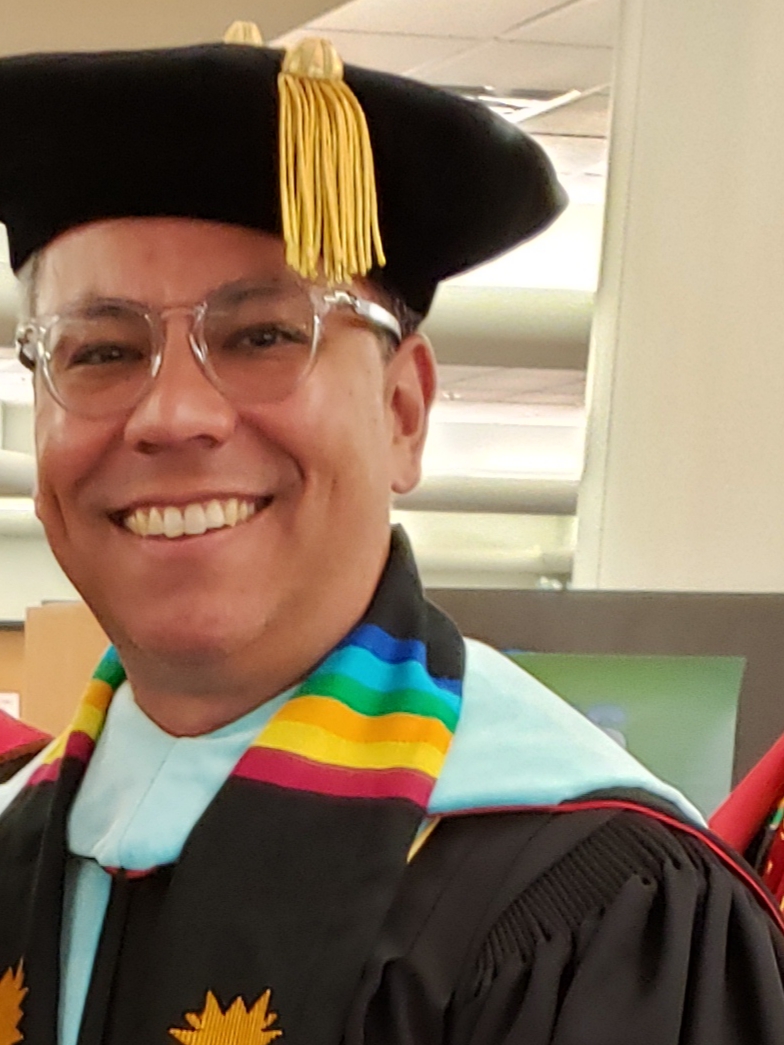
As I sat on a wood stool to be hooded by Dr. Felisha Villarreal Herrera in May 2018, I felt the weight of what I had embarked on, with my parents in the audience—roots—and my partner and children cheering me on—future. When we first started, I was told, “You will become the expert, the one and only person who will know what you know. That is what it means to be a doctor.” One year later in April 2019, I published an article based on my dissertation in the prestigious Community College Journal for Research and Practice. In this past year, I have presented at state-wide sponsored events, presented at other community colleges, and trained faculty and HR professionals. Am I an accidental doctor? Given my origin story and professional experiences, this is not so accidental but rather exactly what I need to do, when I needed to do it. I am intentionally here to change paradigms, improve hiring outcomes, and create equitable student success outcomes for our students of color.